Scrolling through shoe options today feels very different from a few years ago. Words like “eco,” “ethical,” and “vegan” show up everywhere, and it is easy to assume they all mean the same thing. While digging into the vegan vs sustainable shoes difference, it quickly became clear that these labels reflect very different priorities, and understanding them can completely change how you shop.
Key Takeaways
- Vegan shoes focus on eliminating animal-derived materials
- Sustainable shoes focus on reducing environmental impact
- A shoe can be vegan but still harm the environment
- Durable, eco-friendly materials often define sustainability
- The best choice depends on your personal values and usage habits
What Are Vegan Shoes?
Explaining what makes a shoe truly vegan and why it matters:
Animal-Free By Design
Vegan shoes are made without any animal-derived components. That means no leather, wool, silk, or even animal-based adhesives. Instead, brands rely on alternatives like polyurethane, recycled plastics, or plant-based leathers.
This approach aligns strongly with animal welfare values. Organizations like PETA advocate for wearing vegan fashion as a way to reduce demand for animal exploitation in the fashion industry.
Materials Used In Vegan Footwear
Most vegan shoes use synthetic materials such as PU or PVC to replicate leather. While these materials are versatile and cost-effective, they are often petroleum-based.
Recent innovations include plant-based options like pineapple leather and cactus leather. These alternatives aim to reduce reliance on plastics, though they are still evolving in durability and scalability.
The Trade-Offs To Know
While vegan shoes eliminate animal harm, they are not automatically eco-friendly. Research from the MIT highlights that synthetic materials can have a higher carbon footprint due to fossil fuel processing. This creates an important distinction that many shoppers overlook when comparing vegan and sustainable options.
What Are Sustainable Shoes?
Look at footwear designed with the planet in mind
Environment First Approach
Sustainable shoes are designed to minimize environmental harm at every stage. This includes material sourcing, manufacturing, packaging, and even disposal.
Brands often use recycled materials, organic fibers, and renewable resources to lower their footprint. The goal is not just to create a product, but to reduce long-term environmental impact.
Lifecycle Thinking Explained
Sustainability goes beyond what a shoe is made of. It considers the entire lifecycle, from raw material extraction to end-of-life disposal.
According to the Ellen MacArthur Foundation, circular design plays a key role in reducing waste by encouraging reuse, recycling, and biodegradability.
Not Always Vegan
Sustainable shoes may still include responsibly sourced leather. This is because natural leather can be more durable and biodegradable compared to synthetic alternatives. This is where the vegan vs sustainable shoes difference becomes very clear, as the priorities are fundamentally different.
Vegan vs Sustainable Shoes Difference Explained
Breaking down the core differences in a simple and practical way.
Comparison At A Glance
| Feature | Vegan Shoes | Sustainable Shoes |
| Primary Goal | Zero animal products | Low environmental impact |
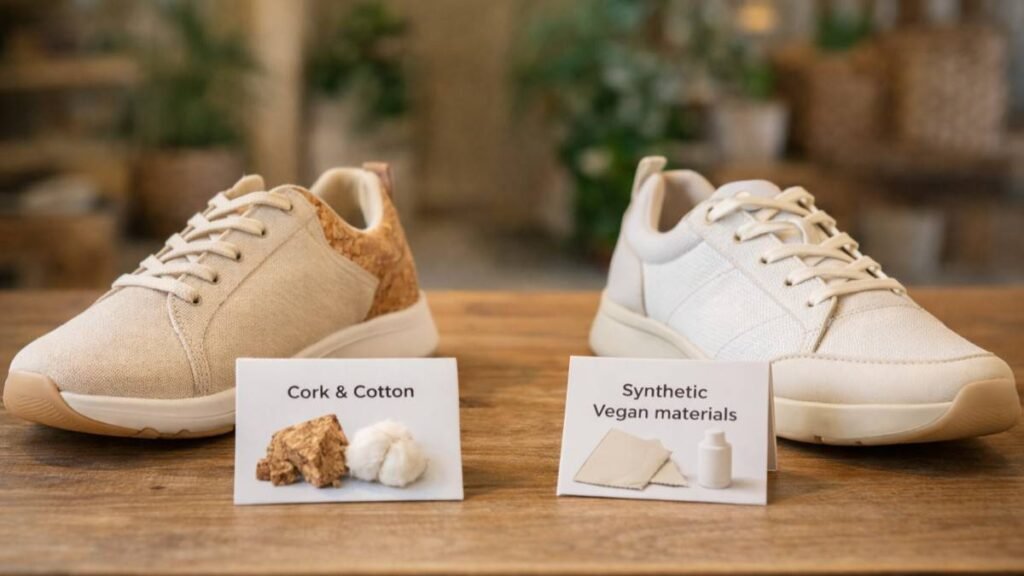
| Key Materials | PU, PVC, plant-based leather | Recycled fibers, cork, organic cotton |
| Animal Products | None | May include ethical leather |
| Durability | Moderate | Often high |
| Environmental Impact | Can be higher | Generally lower |
Why They Are Often Confused?
Both categories fall under ethical fashion, which is why they are often used interchangeably. However, their goals differ significantly.
Understanding this distinction helps avoid the common mistake of assuming that all vegan products are environmentally friendly.
Key Differences In Materials
This section explores how materials shape the vegan vs sustainable shoes difference

Vegan Materials Explained
Vegan footwear often relies on synthetic plastics like polyurethane and PVC. These materials mimic leather but are derived from fossil fuels. While they solve the problem of animal cruelty, they are not biodegradable and can contribute to long-term pollution.
Sustainable Materials Explained
Sustainable shoes prioritize renewable and recycled materials such as cork, hemp, organic cotton, and recycled ocean plastics.
These materials reduce environmental impact and are often biodegradable or recyclable, making them more aligned with circular economy principles.
Performance And Durability
Durability plays a major role in sustainability. Shoes that last longer reduce the need for frequent replacements, which lowers overall resource consumption. Sustainable footwear is often designed with longevity in mind, while some synthetic vegan options may wear out faster.
Lifecycle Impact Breakdown
Have a look at the full environmental impact beyond just materials.

Carbon Footprint Insights
A report by the European Environment Agency shows that synthetic materials often require more energy during production, leading to higher emissions. Natural and recycled materials typically have a lower carbon footprint, especially when sourced responsibly.
Durability And Usage
Short-lived products increase waste and resource consumption. Fast fashion footwear often lasts less than a year, while well-made sustainable shoes can last several years. Longer lifespan directly reduces environmental impact, making durability a key sustainability factor.
End Of Life Impact
What happens after a shoe is discarded matters just as much as how it is made. Synthetic vegan shoes can take hundreds of years to decompose, while sustainable materials may biodegrade or be recycled, reducing landfill waste.
Where Do They Overlap?
So where do vegan and sustainable footwear meet?

Rise Of Bio-Based Materials
Many brands are now combining both approaches by using plant-based materials that are both vegan and eco-friendly. Examples include Piñatex made from pineapple leaves, cactus leather, and apple leather derived from agricultural waste.
Innovation In Footwear
These materials reduce reliance on both animal products and heavy plastics. They represent the future of footwear where ethics and sustainability align.
What To Look For
Look for transparency in sourcing, certifications, and material breakdowns. Brands that clearly explain their processes are more likely to deliver genuinely ethical products.
How To Choose Smartly?
Let me help you make a decision based on your priorities:
Choose Based On Values
If animal welfare is your top concern, vegan shoes are the better option. If environmental impact matters more, sustainable shoes are the way to go.
Look Beyond Labels
Marketing terms can be misleading. Always check material composition, durability, and brand transparency before making a purchase.
Aim For Balance
The best option often lies in choosing products that combine both vegan and sustainable elements, such as plant-based one like bamboo fiber shoes and recyclable materials.
Frequently Asked Questions
1. Are vegan shoes more sustainable?
No, not always. Many vegan shoes use synthetic materials that can have a higher environmental impact than sustainable alternatives.
2. What shoes do podiatrists say not to wear?
Podiatrists often warn against unsupportive shoes like flat flip-flops or poorly cushioned sneakers due to lack of arch support.
3. What is the downside of vegan leather?
It is often plastic-based, less durable, and not biodegradable, which can contribute to environmental pollution.
4. Is vegan leather really just plastic?
In most cases, yes. Many vegan leathers are made from PU or PVC, though plant-based options are becoming more common.
Making Sense Of The Vegan vs Sustainable Shoes Difference
Understanding the vegan vs sustainable shoes difference is all about knowing what each label truly stands for. Vegan shoes protect animals, while sustainable shoes protect the planet. The smartest choice often blends both values by focusing on durability, responsible materials, and transparency. Choosing better footwear is not about perfection, but about making more informed decisions with every step.