Shopping for better footwear used to feel overwhelming, especially with so many “eco-friendly” claims everywhere. Over time, paying attention to sustainable materials used in shoes helped me understand what truly matters. It is not just about labels. It is about how materials perform, how long they last, and how they impact both your comfort and the planet.
Key Takeaways
- Sustainable footwear goes beyond trends and focuses on real-world performance, durability, and reduced environmental impact.
- Materials like cork, hemp, and algae foam improve comfort while lowering carbon footprint.
- Recycled inputs reduce waste but must be balanced with breathability and support.
- The best approach is choosing shoes that combine natural, bio-based, and recycled materials for function and longevity.
What Are The Sustainable Materials Used In Shoes?
Designers create sustainable footwear materials to reduce environmental harm during sourcing, manufacturing, and disposal. These include renewable resources, recycled waste, and innovative bio-based alternatives that replace traditional petroleum-based plastics and high-impact leather. The goal is to lower carbon emissions while maintaining performance and comfort.
Most importantly, sustainability is not just about the material itself. It is about how that material functions in everyday use. A breathable upper, a supportive midsole, and a durable outsole all contribute to a shoe that lasts longer and reduces waste over time.
Plant-Based And Bio Innovations In Footwear
These materials are reshaping how modern shoes are made.
Fruit-Based And Bio Leather Alternatives
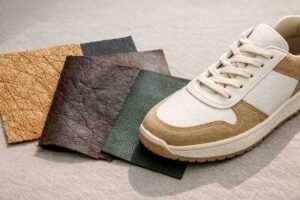
Fruit-based leathers are created from agricultural byproducts like pineapple leaves, apple skins, grape waste, and cactus fibers. These alternatives mimic the look and feel of leather while using far fewer resources. They reduce dependence on animal leather and avoid harmful tanning processes.
In real-world use, these materials work well in casual sneakers and lifestyle shoes. They offer flexibility and style, though they may not always match the long-term durability of traditional leather. Still, for everyday wear, they provide a solid balance between sustainability and comfort.
Mushroom Leather And Mycelium
Mycelium leather is grown from mushroom roots in controlled environments. It requires minimal water, energy, and time compared to traditional leather production. This makes it one of the lowest-impact materials currently available.
From a performance perspective, mycelium is lightweight and adaptable. Fashion-forward footwear and light use suit it best, making it ideal for people who want sustainability without sacrificing aesthetics.
Cork, Hemp, And Organic Cotton
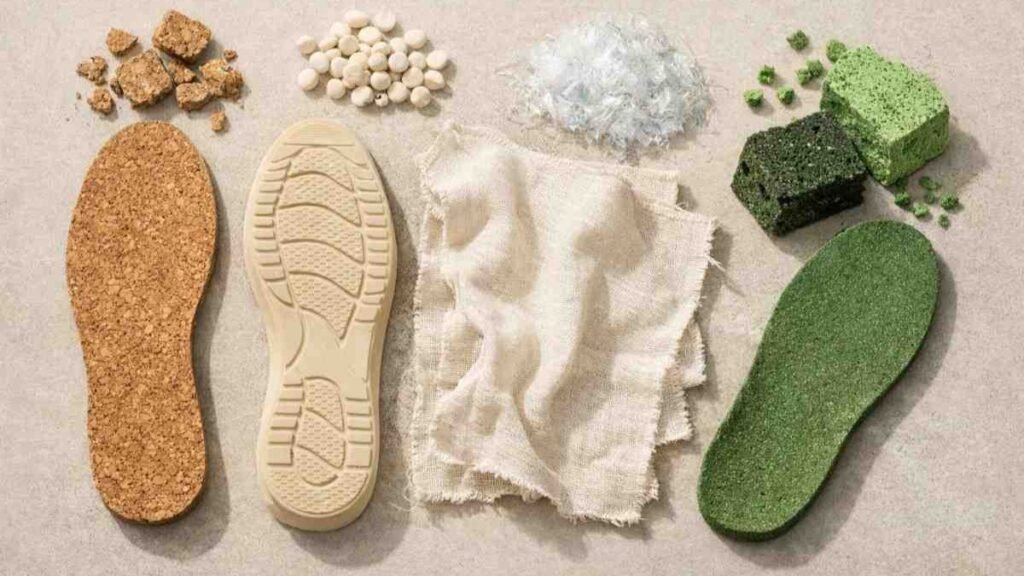
Cork is harvested from tree bark without harming the tree, making it a regenerative resource. It molds to your foot over time, offering excellent support and shock absorption. Hemp and organic cotton provide breathable uppers that reduce moisture and improve comfort.
These materials are commonly used in sandals, casual shoes, and eco sneakers. They are especially useful for long hours of wear because they maintain airflow and reduce foot fatigue.

Algae-Based Foam And Bio Midsoles
Algae-based foam replaces petroleum-based materials in midsoles. It is created by harvesting excess algae from water systems, helping clean waterways while producing cushioning material.
In terms of performance, algae foam offers soft cushioning and good energy return. It works well in walking shoes and light athletic footwear, making it a strong alternative to traditional EVA foam.
Recycled And Repurposed Materials In Shoes
These materials help reduce waste while maintaining functionality.
Recycled Ocean Plastic And Polyester
Recycled polyester is made from plastic bottles, fishing nets, and ocean waste. It is widely used in mesh uppers and linings. This reduces landfill waste and lowers the need for new plastic production.
In everyday use, recycled polyester performs well in athletic shoes. It is durable and flexible but may trap more heat than natural fibers. This makes it better suited for performance rather than all-day casual wear.
Recycled Rubber And Outsoles
Manufacturers often source recycled rubber from old tires or manufacturing scrap and use it in outsoles to provide grip and durability. This helps extend the lifespan of shoes while reducing waste.
From a practical standpoint, recycled rubber is excellent for traction and stability. It works well in running shoes, hiking shoes, and everyday sneakers where durability is essential.
Recycled Leather And Regenerated Textiles
Recycled leather combines leftover leather fibers with synthetic binders to create a material that resembles genuine leather. Manufacturers break down old textiles and spin them into new fibers to create regenerated wool and canvas.
They commonly use these materials in linings and uppers. They provide a familiar feel while reducing waste, making them a practical option for sustainable footwear.
Comparison Of Eco-Friendly Materials
Understanding how different materials compare helps you choose wisely.
| Material Class | Key Examples | Primary Use Case |
| Renewable | Cork, Natural Rubber, Hemp | Soles, uppers, insoles |
| Bio-Based | Mycelium, Pineapple leather, Algae foam | Leather alternatives, midsoles |
| Recycled | Ocean plastic, Recycled rubber | Outsoles, mesh uppers |
| Natural Fiber | Organic cotton, Wool, Tencel | Linings, breathable uppers |
Each category serves a specific function. The best shoes combine multiple materials to balance comfort, durability, and sustainability.
How Sustainable Materials Used In Shoes Affect Performance
Material choice directly impacts how a shoe feels and performs.

Cushioning And Comfort
The right material improves long-term comfort. Bio-based foams and cork provide cushioning while supporting natural foot movement. They absorb impact and reduce stress on joints, making them ideal for walking and standing.
Stability And Support
Firm materials enhance balance and posture. Natural rubber and cork offer stability by preventing excessive foot movement. This helps maintain alignment and reduces fatigue during long periods of wear.
Durability And Longevity
Long-lasting shoes are more sustainable. Recycled rubber and reinforced natural fibers increase durability. A shoe that lasts longer reduces the need for replacements, which ultimately lowers environmental impact.
Best Use Cases For Sustainable Materials
Different materials perform better depending on how you use your shoes.
Everyday Wear
Breathable materials improve daily comfort. Hemp, organic cotton, and wool are ideal for casual use. They keep your feet cool and reduce odor, making them perfect for long days.
Athletic And Active Use
Performance materials handle movement better. Recycled polyester and algae-based foam provide flexibility and cushioning. They are suitable for workouts, running, and high-movement activities.
Support And Foot Health
Structured materials improve alignment. Cork and natural rubber are excellent for foot support. They are often recommended for people with joint pain or foot conditions.
Examples Of Sustainable Footwear In The Market
Real products show how these materials come together in practice.

- Shoes like Veja Campo sneakers use chrome-free leather, recycled polyester linings, and natural rubber soles.
- Eco Sneako focuses on organic cotton uppers and responsibly sourced rubber outsoles.
- Some minimalist eco shoes incorporate cork insoles and recycled materials in their uppers, offering a balanced approach to sustainability and comfort.
These examples highlight how combining different materials creates a well-rounded product that performs well while reducing environmental impact.
Frequently Asked Questions
1. What Are Sustainable Materials In Shoes?
Sustainable materials used in shoes include renewable, recycled, and bio-based materials that reduce environmental impact while maintaining comfort and durability.
2. What Shoes Are Good For Osteoarthritis?
Shoes with supportive cork footbeds, shock-absorbing midsoles, and stable outsoles help reduce joint stress and improve walking comfort.
3. What Are The Most Environmentally Friendly Shoes?
Natural fibers, recycled materials, and plant-based alternatives make shoes the most environmentally friendly options.
4. What Is The Healthiest Material For Shoes?
Breathable natural materials like wool, hemp, and cork are healthiest as they reduce moisture, improve airflow, and support natural foot alignment.
The Smart Way To Step Forward
Understanding vegan and sustainable shoe materials used in shoes changes how you approach buying footwear. It is no longer about choosing what looks good. It is about selecting materials that support your lifestyle, improve comfort, and reduce environmental impact. Once you start paying attention to these details, every purchase becomes more intentional and far more valuable.